
Highlight · Aluminium alloy 7050
~60×
Tool life
A conventional tool failed after 6 holes. Leidao ultrasonic drilled 362 holes.
Sector 01
Ultrasonic machining equipment and core components, built on process know-how for hard-to-machine materials.
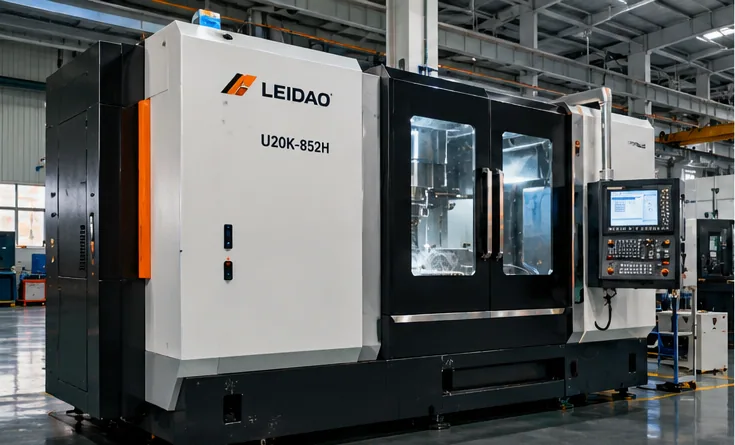
Flagship equipment
A three-axis vertical machining centre with a third-generation digital ultrasonic system. Shown at the 2026 Shanghai machine tool exhibition with Baoji Machine Tool Group under the Baoji Leidao co-brand.
0.3 mm slot
Tungsten-nickel-iron alloy
Conventional tools break on contact. Stable machining was achieved, with tool life of one workpiece or more.
62 : 1
Copper deep hole
Ø1.8 mm, 112 mm deep. About 15 minutes per hole, tool life of 50+ pieces, smooth wall and burr-free exit.
−80%
Titanium shackle drilling
Cycle time cut from 60 to 12 minutes per piece (80% shorter), with no tool wear after 12 pieces.
Ra < 0.1 µm
Carbide mould
Mirror-level finish on a phone-case mould, without further polishing.
87 s
316 stainless steel drilling
Per piece at Ra 0.125 µm, with very slight tool wear.
Results from owner-provided Leidao technical materials.
Manufacturing capability
Equipment, workshop and line, shown as concept visuals. The diagram below explains the model.
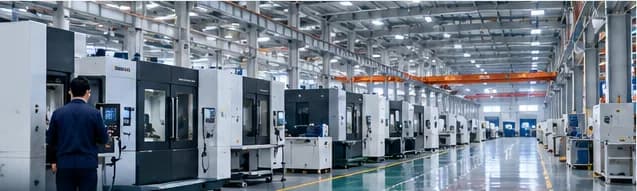
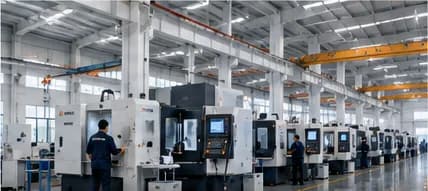
Concept visuals. Not photographs of actual SPETEC or Leidao equipment, facilities, staff or exhibitions.
Measured performance
Results from Leidao ultrasonic machining compared with conventional tools, across difficult-to-machine materials.
Highlight · Aluminium alloy 7050
~60×
Tool life
A conventional tool failed after 6 holes. Leidao ultrasonic drilled 362 holes.
SiC plate
800%
Efficiency improvement
Tool-wear comparison 1:7
Alumina ceramic
750%
Efficiency improvement
Tool-wear comparison 1:6
High-temperature alloy
~7×
Efficiency
48 holes: 432 s → 58 s per hole
Titanium alloy TC18
~4×
Efficiency improvement
Compared with conventional machining
High-temperature alloy
0.02 mm
Leidao tool wear
Measured after machining. The conventional tool was scrapped.
Time per hole, high-temperature alloy
Holes before tool failure, aluminium 7050
Surface texture at 130× magnification
Leidao machining leaves a regular, ordered texture. Conventional machining leaves a disordered one. A regular texture means precision, consistency and a controllable surface function.
Results from owner-provided Leidao technical test materials.
Group-reported performance
Figures reported by the group, compared with conventional machine tools, for ultrasonic machining of materials such as silicon carbide, zirconia, titanium and high-temperature alloys. They do not apply to every machine, material or operating condition.
Leidao ultrasonic machining is applied across hard, brittle and heat-resistant materials.
Silicon carbide, an extremely hard ceramic for demanding environments.
Tool-wear 1:7 · efficiency +800%
Dense, hard and brittle ceramic used in electronic and wear components.
Tool-wear 1:6 · efficiency +750%
Hard, brittle and heat-resistant engineering ceramics.
High strength for their weight, but difficult to machine.
Efficiency ~4× (TC18)
Alloys designed to keep their strength at high temperature.
48 holes: 432 s → 58 s per hole
Light structural alloys used in aerospace and equipment.
Tool life ~60× (7050)
Diamond and diamond-based materials for thermal and semiconductor uses.
Aluminium nitride and ceramic matrix composites are further areas for the same approach.
A ceramic valued for high thermal conductivity.
Ceramic matrix composites: ceramic fibres in a ceramic matrix.
Materials and applications
Representative components in difficult-to-machine materials.
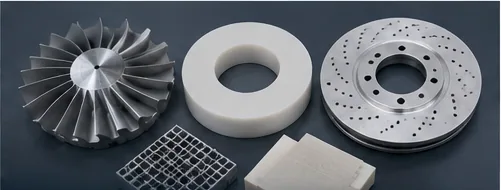
Precision components
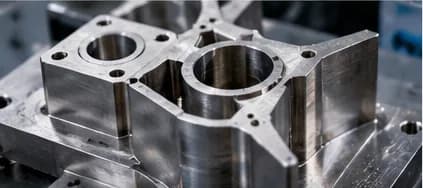
Titanium alloy part
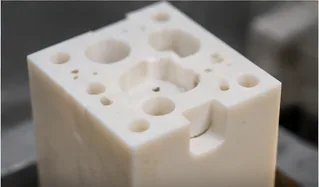
Ceramic block
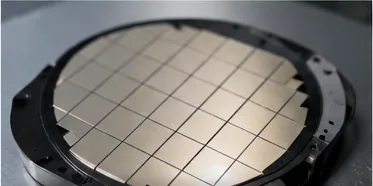
Semiconductor wafer
Concept visuals. Not photographs of actual SPETEC or Leidao equipment, facilities, staff or exhibitions.
AI infrastructure
As compute grows, two physical limits appear: how AI hardware is made, and how its heat is removed. Both come down to machining the hardest materials precisely.
Precision machining for:
Precision shaping of:
As AI pushes compute higher, Leidao drives manufacturing cost lower.
Diamond
Leidao combines its own ultrasonic grinding equipment with diamond-wafer process engineering.
MPCVD diamond blank
Ultrasonic rough grinding
Precision grinding and flatness control
Ultrasonic polishing
CMP
Cleaning, inspection and packaging
Semiconductor and AI thermal applications
Key idea
Equipment + Process
In-house ultrasonic grinding equipment and diamond-wafer precision processing work together, so equipment and process engineering drive each other.
Case study
Ultrasonic machining makes hard, brittle thermal substrates economical to produce.
F-type ceramic chuck processing
~41%
lower processing cost than market processing
Owner-provided example case.
Engineering and R&D
Process engineering, control software and research come together around each machine.
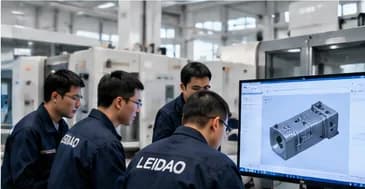
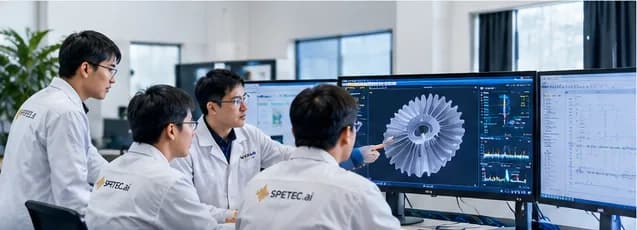
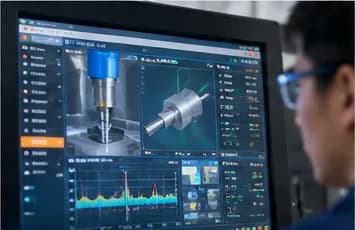
Concept visuals. Not photographs of actual SPETEC or Leidao equipment, facilities, staff or exhibitions.
Credibility
The group presents its equipment at machine tool exhibitions and works with research and industry partners.
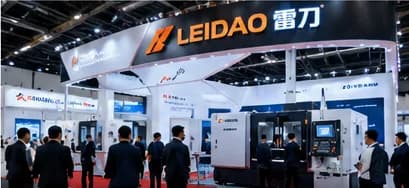
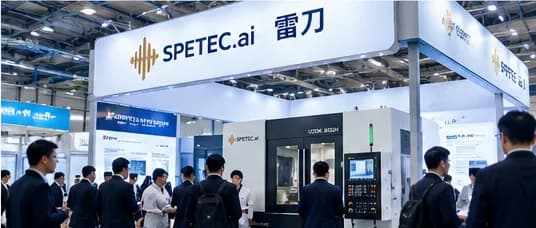
Concept visuals. Not photographs of actual SPETEC or Leidao equipment, facilities, staff or exhibitions.
Ultrasonic precision engineering is combined with machine-tool know-how for hard-to-machine materials.
Each material class brings its own machining challenges.
Tooling, machine and ultrasonic parameters are matched to the material.
Signals and outcomes are recorded during production.
Recorded knowledge becomes a repeatable process model.
Group-reported: 145,000 m² ultrasonic equipment manufacturing and assembly base, completed in 2025.
Read the group profileEquipment roadmap
Two programmes that extend the platform. Both are planned or in development. Neither is an available product.
Planned · prototype 2027
Integrates third-generation intelligent ultrasonic with fractional-order control, for high-performance ceramics and ceramic matrix composites.
In development
A five-axis ultrasonic tool grinder with coating integration, towards a flexible line for high-performance cutting tools.
Targets, not measured results.
Tell us about your manufacturing process, equipment or project, or explore a partnership with the group.